
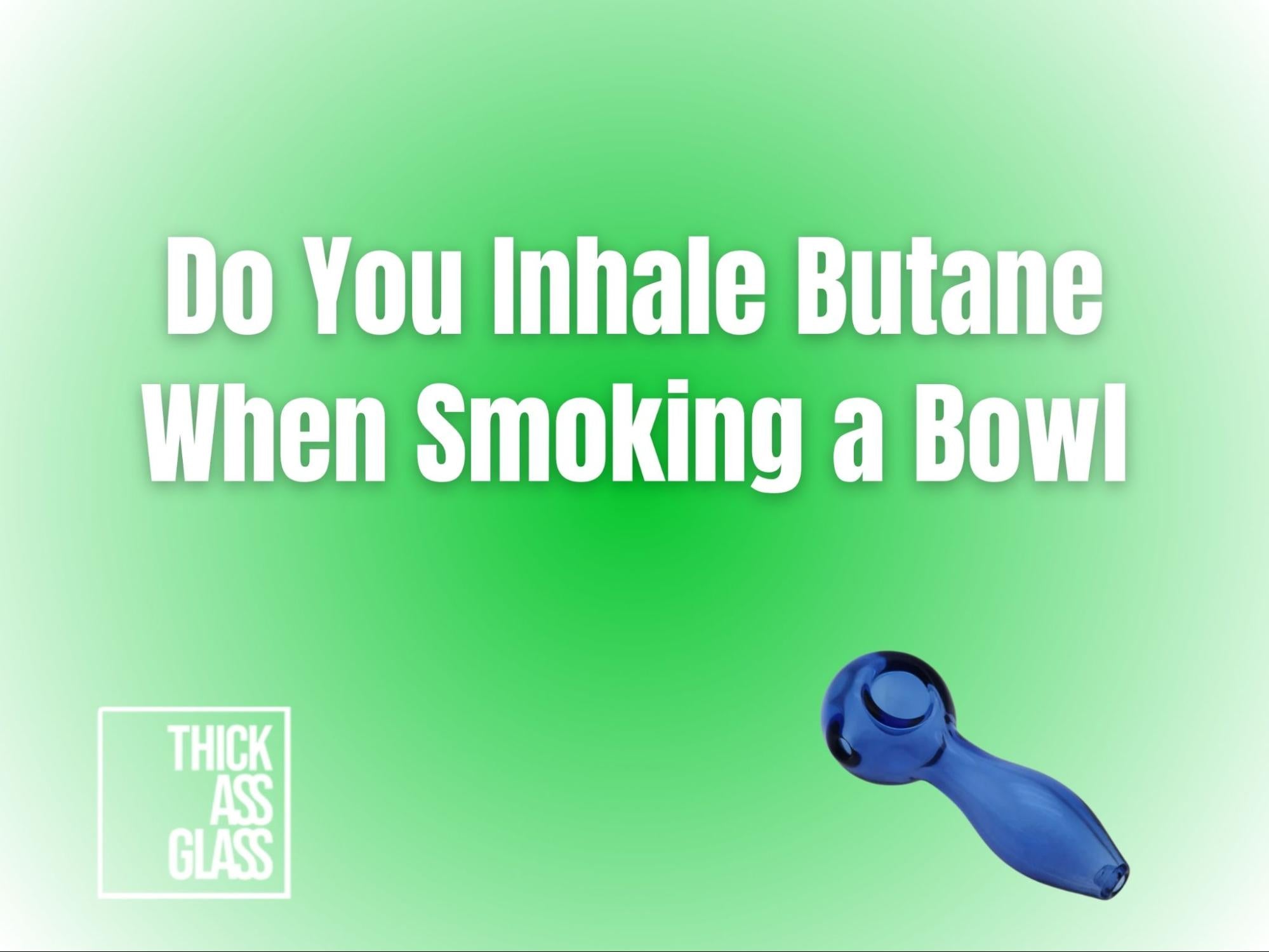
Sometimes, you can inhale a little butane when you light and hit a bowl, especially if you draw while the lighter is still firing or the flame is sputtering. Most of the fuel should combust in a steady blue flame, but real-world lighting is messy, and that is when the funky fuel taste shows up.
Here are some rules of thumb to keep in mind when you are lighting a bowl with a butane powered lighter:
- A steady blue flame burns cleaner than a yellow, flickering, sputtering one.
- Pulling while the lighter is still clicking on is when unburnt fuel can sneak in.
- A sharp butane taste is a practical warning sign that your timing is off.
- Keeping the flame just above the rim heats the material without dragging flame into airflow.
- Short bursts reduce the chance you are inhaling ignition fumes on the first pull.
Thick Ass Glass tries to produce cleanest sessions through controlled heat and solid glass, not “hope it burns off” logic. We build and test heavy-wall pieces with CAD-driven consistency, so your airflow stays stable and every hit tastes exactly like it should.

If you taste fuel, the problem is usually flame placement and draw timing, not the mere fact you used a butane lighter. Let’s look into this more closely.
Are You Inhaling Butane on a Bowl Hit
If you have ever tasted that sharp “fuel” note mid-hit, you are asking the right question. In our experience, the real issue is not the lighter existing at all, it is how the flame and your inhale overlap in the messy real world.
What Actually Happens When You Light It
You can pull a little unburnt butane when you light and inhale at the same time. The risk spikes when your draw goes straight through the flame, especially if you are pulling hard and fast.
Here is the quick physics lesson: a butane flame is a fast mixing zone where fuel meets oxygen and (ideally) finishes burning before the hot gases reach you. If your intake airflow yanks fresh fuel past that burn zone, you can carry some unburned fuel vapor and “lighter-start” smell into your mouthpiece stream.
In other words, your technique controls the overlap between fresh fuel and your inhale. Clean lighting is mostly about keeping the flame stable and out of your direct airflow path.
Does Butane Burn Out Completely?
In ideal conditions, most of the butane in a steady flame combusts before it ever gets near you, so you are mainly inhaling hot combustion gases and whatever you are heating. In everyday use, “complete” combustion is an aspiration, not a guarantee.
Combustion depends on oxygen, mixing, and time. A calm, blue flame with a consistent shape has better odds of burning fuel efficiently. A yellow, flickery, or sputtering flame suggests poor mixing, and that is where leftover fuel and extra byproducts can show up.

Signs You’re Pulling Fuel
You will usually know when butane is hitching a ride, because your senses catch it first. If you taste a chemical bite, smell fuel, or feel immediate throat sting that does not match the material you are heating, treat that as a technique or hardware signal.
A common mistake we see is chasing ignition with a big inhale. A softer start lets the flame do its job before your airflow starts acting like a shop vac.
- Fuel taste on your tongue right as you begin the inhale
- A “lighter-start” smell in the first second or two
- Flame sputter, flare, or audible hissing from the lighter
- You only get the issue when drawing hard, not when drawing gently
If any of those show up, pause, relight with a steadier flame, and keep the flame above the intake instead of in it.
Best Way to Light a Bowl
If you are trying to minimize that “fuel” taste and the chance of pulling unburnt butane, your lighting technique matters as much as your lighter. In our shop experience, clean flavor and smooth pulls come from controlling where the flame sits, how long you apply it, and how you move across the surface.
Keep the Flame Above the Rim
Keep the flame above the rim and let heat do the work. If you pull the flame down into the material while you inhale, you are more likely to draw hot combustion gases and a little unburnt fuel along for the ride.
Think of it like searing a steak: you want radiant heat and a quick kiss of flame at the surface, not a blowtorch buried in the middle. Hold your lighter so the tip of the flame hovers just over the edge, then inhale gently so the flame leans in without disappearing into the chamber.
If you notice a funky butane note, treat it as a technique indicator: ease up your draw, lift the flame slightly, and make sure your lighter is producing a steady flame rather than sputtering.
Use Short Bursts, Not a Long Burn
Short bursts of flame do the job because you are igniting the surface, not running a continuous burner. Long, sustained lighting often overheats the top layer and increases the chance you are inhaling whatever the flame is producing in that moment.
We like a pulse-and-check rhythm: touch flame, inhale a beat, remove flame, then reapply only if you need to. You get better control, and you waste less fuel.
A common mistake we see is treating the lighter like an “on” switch for the whole pull. Instead, let the ember carry the session and use the flame only to start or steer it.
Corner the Bowl for Better Flavor
Cornering the bowl means lighting only a small edge section at a time, and it is one of the cleanest ways to avoid dragging the flame across the entire surface. You get more flavor control, and you are less tempted to pull hard while the lighter is still firing.
This is how this technique works in practice
- Light one edge first, then move to a fresh edge on the next pull
- Use a slower inhale so the ember spreads without needing more flame
- Rotate your lighting points to keep taste consistent through the session
Cornering is the “precision mode” technique: less scorching, more control, and fewer moments where your inhale overlaps with the lighter’s flame.

What Can You Use Instead of Butane Lighters
If you are worried about inhaling a little unburnt fuel while you light and inhale, switching ignition methods can help. Each option below trades convenience for cleaner taste, more control, or both. We will keep it practical, so you can pick what fits your routine.
Old-School Wooden Matches
Wooden matches can reduce that “raw fuel” moment because you are not pulling from an active gas jet. You still create smoke, but the ignition source is a burning match head and wood, which many people find tastes less chemical than a sputtery lighter.
The trick is timing. In our experience, most harshness happens when you inhale while the flame is still dumping hot combustion air into your draw. With a match, you can light your material, then pull once the match is a hair farther away.
Electric Lighters
Electric lighters remove butane from the equation entirely, so they are a solid “do I inhale butane when smoking a bowl?” workaround. Instead of a flame, you get either a hot coil or an electric arc that ignites the surface.
Where they shine is consistency, but where they struggle is geometry and heat density: arcs are directional, coils need contact, and both can be fiddly with deeper or narrower pieces.
If you go electric, focus on usability. You want something that reaches the material easily and holds a steady charge, otherwise you will grab a backup lighter and end up back at square one.
Hemp Wick
Hemp wick is one of the easiest ways to cut down on butane exposure without changing your whole setup. You use your lighter to light the wick, then use that small, steady flame to ignite your material while the lighter is already out of the airflow.
Think of it like moving from a blowtorch to a soldering iron. You gain control, and you usually get a cleaner taste because you are not drawing past the lighter flame. It also makes it easier to “sip” heat into the corner instead of blasting the whole surface at once.
Here is how to light your bowl with a wick:
- Use a short wick length so it does not whip around and drop ash
- Hold the wick above the rim and angle the flame toward the material
- Put the wick out between uses so it does not keep smoldering
If you want the simplest path to less fuel taste while keeping your familiar lighter, hemp wick is usually the most practical middle ground.
Where to Find a Heat Resistant Bowl?
If you are trying to cut down on that funky fuel taste, the “heat resistant” part is usually less about the flame itself and more about glass quality, thickness, and how cleanly your piece holds up over time.
We make glass for people who actually use it, so we will keep this practical.
Why You Can Trust Thick Ass Glass Handpipes
The simplest answer is that a well-made handpipe helps you light more cleanly and consistently, which is exactly what you want if you are worried about inhaling butane when smoking a bowl.
Thick Ass Glass handpipes are built for daily use with sturdier construction and more consistent shaping. They fit into your hand naturally, with your thumb fitting right over the carb hole that lets you control airflow very precisely.
In other words, our pipes are efficient combustion machines that deliver pure hits and last for years with only routine maintenance.
Thick Borosilicate Handles Any Flame
Thick borosilicate works with basically any flame source you are using, because it is designed for thermal shock resistance. This material is perfect for bowls precisely because it handles heat well and doesn’t degrade with repeated use.
In practice, that means you can use a TAG pipe with any kind of lighter or wick without worrying whether the glass will crack from direct exposure to flame. If you current one is leaving too much of that butane taste after a hit, you can switch to any other lighting method without thinking twice.
A thick piece gives you a stable platform, but your flame position and draw speed are what keep unburnt fuel out of your inhale. That’s why you should pair great hardware with better technique for best results.
Get a “Tank” Spoon Pipe from TAG
If you want a tough, heat-resilient daily driver, start with a thick spoon pipe that feels overbuilt on purpose. That extra mass is your buffer against stress, drops, and repeated heat cycles.
TAG 3.25" Spoon Pipe is the starter option that fits in your hand easily and can be carried around in a pocket.

TAG 4.5" Dry Spoon Pipe has a bit more heft to it, but its airflow dynamics are even more impressive due to large diameter of the mouthpiece opening.

When Dialed Flame Meets Great Glass
If you are worried about inhaling butane, your technique is the first lever to pull. Keep the flame above the rim, use short bursts, and never draw through a sputtering lighter.
The second lever is your pipe. When your glass is thin, cracked, or sloppy at the intake, you end up compensating with bigger flames and harsher pulls.
We build Thick Ass Glass handpipes from thick borosilicate with durability in mind, so you can focus on a steady light and a clean draw instead of babying fragile glass.
Grab a Thick Ass Glass spoon pipe and enjoy smoother sessions and better flavor.