

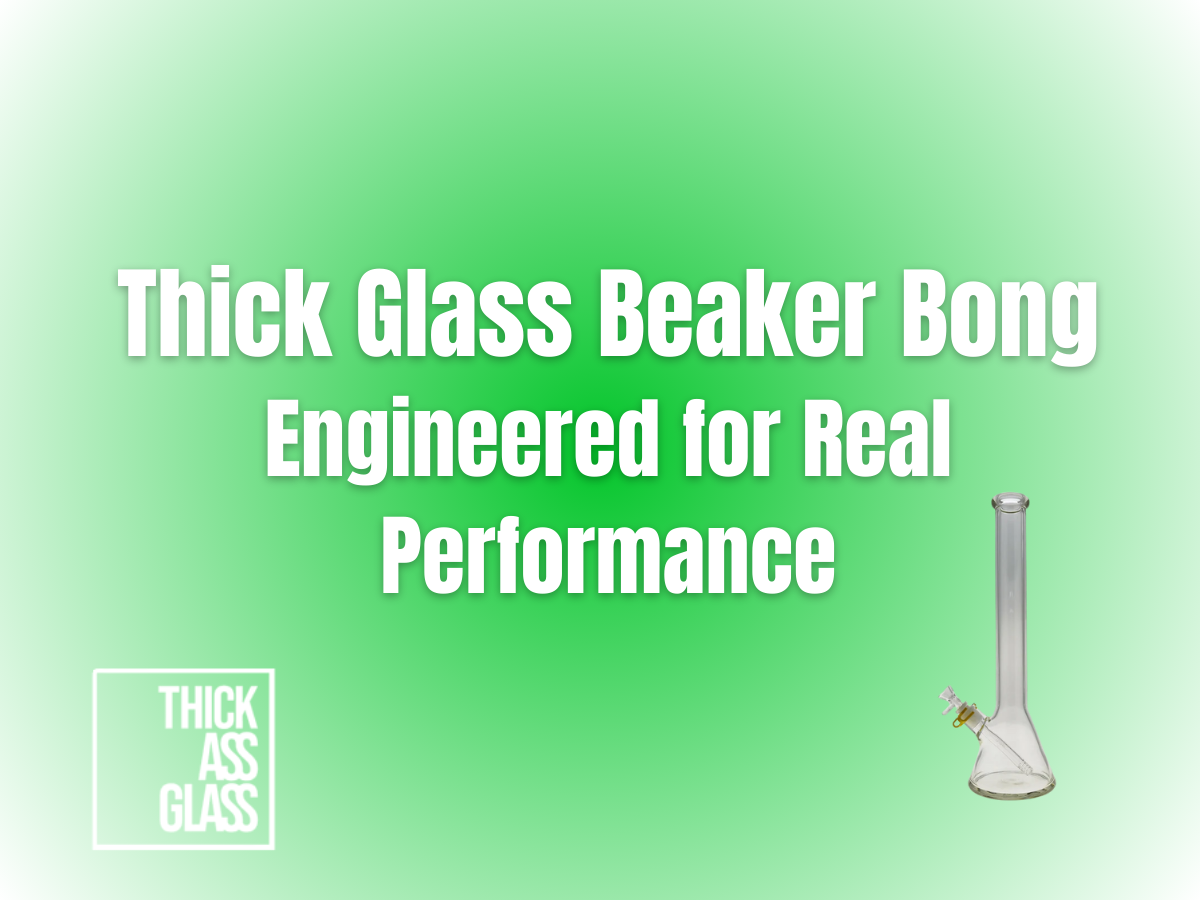
There’s a reason experienced smokers gravitate toward a thick glass beaker bong the moment they pick one up. That immediate sense of weight, balance, and stability isn’t cosmetic, it’s mechanical. Glass thickness changes how a bong handles heat, airflow, water movement, and long-term use.
Most standard beaker bongs are built with 3–4mm walls and paper-thin bases. They work, but they flex, heat unevenly, and fail where stress concentrates. A properly engineered thick glass beaker bong, built with 7–9mm walls and a reinforced 12–16mm base, behaves differently in every measurable way.
This guide breaks down why thickness matters, how the beaker shape amplifies those benefits, and what to look for if you want a bong that performs the same on day 1 as it does years later.
How Thick Glass Changes the Smoking Experience

Glass thickness directly affects how smoke moves, how heat is managed, and how consistent each pull feels.
Thermal Stability During Use
Thin glass heats quickly and unevenly. Each hit creates hot spots near the bowl and joint, stressing the glass and warming the water faster than most people realize. Thick borosilicate glass acts as thermal mass. Heat spreads slowly and evenly across the chamber instead of concentrating at weak points.
The result is smoother hits, less temperature shock, and significantly lower risk of joint cracking over time. Water stays cooler longer, and the piece feels consistent from the first pull to the last.
Reduced Vibration and Rattle
That solid thunk when you set down a thick glass beaker isn’t just satisfying, it’s functional. Extra mass dampens vibration. Downstems seat properly. Joints stay aligned. There’s no hollow ringing or subtle flex during pulls.
Everything stays where it’s supposed to be, which translates into smoother airflow and better long-term durability.
Consistent Airflow and Draw Resistance
Under vacuum, thin glass can flex microscopically. You don’t see it, but you feel it, uneven resistance, inconsistent pulls, and subtle turbulence. Thick glass holds its shape. Airflow stays predictable, allowing the downstem and water column to do their job efficiently.
Once you experience consistent draw resistance, it’s hard to go back.
Why the Beaker Shape Works So Well
The beaker isn’t just a classic silhouette. It’s one of the most efficient water chamber designs ever used in a bong.
Increased Water Volume
A beaker base holds significantly more water than a straight tube. More water means more filtration, longer cooling paths, and smoother smoke. When paired with thick glass construction, that extra volume doesn’t destabilize the piece, it enhances it.
Proper fill is simple: water just above the downstem slits. The wide base allows bubbles to expand fully instead of stacking vertically, improving diffusion without adding drag.
Superior Bubble Diffusion
The expanded base gives bubbles room to form, separate, and collapse efficiently. Smoke breaks into smaller particles, increasing surface contact with water while preserving flavor. This is why beakers feel smoother without feeling restrictive.
Thick glass keeps the chamber stable during heavy pulls, preventing water surge and inconsistent bubbling.
Heat Distribution and Stress Reduction

Heat is one of the biggest enemies of glass longevity. Thickness controls how that heat behaves.
Even Heat Distribution
Thick walls spread heat across a larger surface area. Instead of sharp temperature gradients near joints and welds, the entire structure warms gradually. This reduces internal stress and extends the life of the piece.
Fewer Hot Spots
Most cracks start at predictable locations: joint welds, base transitions, and thin sections near the downstem. Thick glass reinforces these zones, distributing stress instead of concentrating it.
Resistance to Thermal Shock
Going from cold water to hot smoke, or cleaning with warm water, creates rapid temperature changes. Thick borosilicate glass absorbs these changes slowly, dramatically reducing the chance of fractures compared to thin-walled glass.
Thick Glass vs Standard Glass: Real-World Differences
Durability Over Time
Standard beaker bongs often become disposable within a year. Hairline cracks, loose joints, and cloudy glass are common. Thick glass beaker bongs maintain tight tolerances, structural integrity, and clarity for years of regular use.
Stability and Confidence
Weight matters. A thick base lowers the center of gravity, reducing tip-over risk and making the piece feel planted. You stop worrying about normal handling and start focusing on the session.
Long-Term Value
Paying slightly more upfront for thick glass almost always costs less over time. Fewer replacements, better performance, and a piece that doesn’t degrade with use.
Optimizing a Thick Glass Beaker Bong
Water Level
Fill just above the downstem slits. Too much water adds drag; too little reduces filtration. The beaker design gives you a wide margin for dialing it in.
Accessories
Thick glass beakers pair well with ash catchers, multi-hole bowls, and properly sized downstems. Reinforced joints handle accessories without stress, especially when secured with keck clips.
Maintenance
Thick borosilicate glass tolerates regular cleaning without fatigue. Weekly alcohol-and-salt cleaning keeps airflow unrestricted and preserves flavor. Rinse with warm water after sessions and change water daily for best performance.
Upgrade to a Beaker Built to Last

Thin glass beaker bongs work, until they don’t. Cracks, harsh hits, unstable bases, and inconsistent airflow turn sessions into compromises.
Thick Ass Glass thick glass beaker bongs are engineered differently. With 7–9mm walls, ultra-thick reinforced bases, precision-cut joints, and airflow designed in CAD, not guessed at, they deliver the smooth, stable performance experienced smokers expect.
If you’re ready to stop replacing glass and start using a bong that’s built to perform long-term, explore our collection of Thick Ass Glass beaker bongs and feel what real thickness does on the first pull.