


This guide covers the history of the object and glass and hardware for use with legal products only, in line with your state's laws. TAG makes no health claims about any material you choose to use.
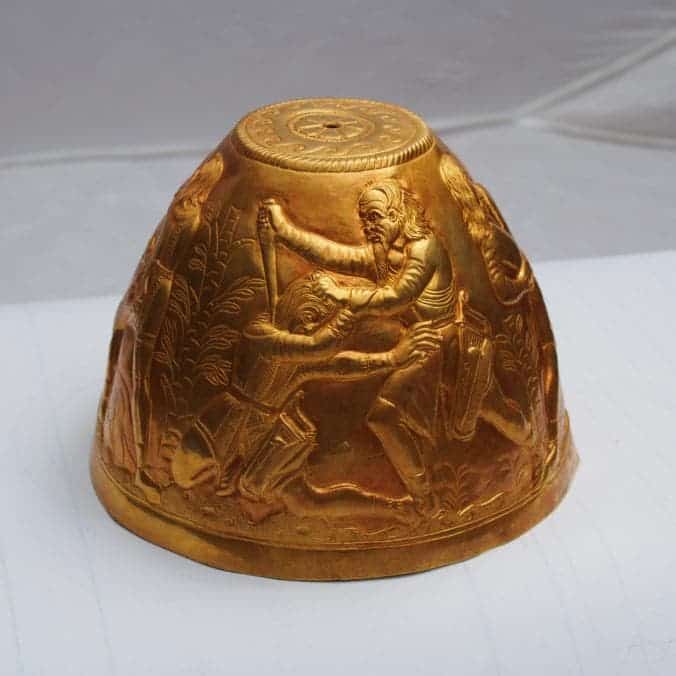
Bongs date back roughly 2,400 years, when Scythian chiefs used gold vessels for smoke. By 1400 BCE, Ethiopians crafted ceramic bongs with underground stems for cooling. Thai bamboo tubes refined the design, paving the way for modern borosilicate glass bongs built for smooth, filtered draws.
Smoke Signals from the Past: A Quick Reminder of Bong History
Before glass bongs showed up in dorm rooms or storefront displays, people were already using some surprisingly advanced tech. Here is a quick list to reset your timeline:
-
2,400 years ago: Scythian tribal chiefs used ornate gold bongs, found in burial mounds in Russia.
-
1400 BCE: Ancient Ethiopian bongs, some designed to cool smoke through underground stems, show early experimentation with airflow.
-
Centuries ago in Thailand: The word buang described bamboo tubes used for smoking. That term eventually became bong.
-
1970s: Bob Snodgrass created the first modern borosilicate glass bongs using silver and gold fuming, bringing function and art together.
People love to say bongs came from California counterculture. That is like saying the wheel came from a skateboard. The real story is deeper, older, and far more inventive.
What you are about to read is not just a history lesson. It is a trip through royal tombs, ancient rituals, glassblowing revolutions, and modern design. Let us dig into how we got from bamboo tubes to precision-engineered filtration systems.
Who Really Invented the Bong?
The question of who made the first bong is not as simple as picking a year or a continent.
Like fire or music, the idea of smoke as a ritual seems to have appeared in different places, shaped by climate, materials, and whatever plants were on hand.
But if you are picturing a smooth glass tube with water bubbling through a downstem, you are about 2,000 years too early.
Scythians, Ethiopians, and the Bong That Was Not a Bong
The oldest known bong-like artifacts come from the Scythians, nomadic warriors who ruled parts of what is now Russia. Archaeologists found gold vessels in their tombs.
These objects were beautiful, but they were not designed for water. Based on their shape, they were likely used to fill enclosed spaces with smoke rather than filter it.

Meanwhile, in East Africa, Ethiopians were making something closer to the modern concept. Pottery bongs buried in graves date back to 1400 BCE.
Some were built to pull smoke through underground stems, probably to cool it before inhalation. That design choice feels a lot like the first steps toward engineering smoother draws.
In Mongolia, smoke rituals involved throwing herb onto heated stones inside tents.
The smoke would fill the air, and people gathered around it. Again, no water chamber, but a shared purpose: using smoke for ceremony.
When Does a Pipe Become a Bong?
True water filtration may have begun in Ming Dynasty China. Some scholars point to bamboo water pipes used for tobacco and herbs, with water cooling acting as a primitive filter. But there is disagreement here.
Others argue that most ancient designs lacked any clear mechanism for water use and were closer to dry pipes.
The truth? Bong design did not arrive all at once. It evolved slowly, through experimentation, geography, and good old trial and error.
Buang, Bong, and Beyond: The Linguistic Leap Across Cultures
The word bong traces back to the Thai term buang, which referred specifically to bamboo tubes used to smoke herbs through water. These were functional devices, carved from local materials, designed to cool and filter smoke using a basic water chamber.
The term was practical and descriptive, tied directly to the tool itself.
Western awareness of the word began in the mid-20th century. As American soldiers returned from Southeast Asia, they brought stories, objects, and language from the region. Among these was the concept of the bamboo water pipe and the word that described it.
At the time, Western smokers used the term water pipe, a clinical phrase more suited to hardware stores than everyday slang.
By the 1960s and 70s, the term bong began circulating among glass artists and underground publishers. It was shorter, easier to remember, and quickly took hold.
The word started appearing in print, gaining traction as glass designs replaced bamboo. Over time, bong overtook water pipe in everyday speech. What began as a Thai description became the global shorthand for water-filtered smoking devices.
A Global Evolution of Bong Design through Centuries
Bong design has never followed a single path. It developed independently in different regions, shaped by local resources, beliefs, and creative problem-solving. What connects them is a shared goal: a smoother draw through some form of cooling or filtration.
The form changed, but the function stayed consistent.
Early Bong Technology Around the World
Long before glassblowers entered the picture, people were building smoke tools out of whatever they had. Here are some of the earliest known examples:
-
Ethiopia, 1400 BCE: Ceramic and horn bongs, some embedded into the ground, possibly to cool smoke through the soil before inhalation.
-
Thailand: Bamboo tubes, simple in design but effective at pulling smoke through water. The earliest known use of the word that would become bong.
-
China, Ming and Qing dynasties: Sophisticated bamboo water pipes that likely introduced controlled water filtration.
-
Qing Dynasty tombs: Empress Dowager Cixi was buried with three high-end smoking devices, highlighting their cultural and ceremonial value.
These tools were often communal, built for rituals or shared use rather than private sessions.
Glass: The Turning Point in Bong History
The arrival of borosilicate glass in the 20th century changed everything. This material resists heat, holds its shape under stress, and allows for advanced internal structures.
Artists like Bob Snodgrass began experimenting with fuming, infusing glass with silver or gold for color and depth. These designs were no longer just tools, they became expressions of function and artistry.
Glass took over because it performs better. It does not alter the taste of your herb. It is easier to clean. It lets you see the smoke. Clay and wood might be traditional, but they cannot compete with the clarity, durability, and control that borosilicate glass delivers. That is why it became the new standard.
The Hippie Era and the Glass Boom
In the 1960s and 70s, bongs became part of the cultural backdrop. What had once been a quiet tool turned into a visible symbol of personal ritual and anti-establishment thinking.
Glassblowers across the country were creating small-batch pieces with unique shapes and features, and head shops carried them alongside vinyl records, incense, and posters.

The bong was no longer a hidden object. It became a form of expression.
As popularity grew, so did government attention.
In the early 2000s, federal agencies launched Operation Pipe Dreams, targeting shops and distributors. Entire inventories were confiscated.
Some businesses never recovered. The campaign sent a clear message, and many glassmakers went quiet or moved online.
Modern Makers and the Online Shift
As traditional retailers backed away, online storefronts stepped in.
Thick Ass Glass came into that landscape with a clear purpose.
Most glass available was either fragile, over-decorated, or built with no attention to airflow. We decided to take another path.
Our focus was on structural integrity, clean diffusion, and pieces that performed consistently over time. The goal was not to follow the market but to reshape it around better standards. That mindset still defines everything we do.
Today's Tech: How Modern Bongs Use Engineering
Bong design today looks nothing like it did a few decades ago. Function is now shaped by engineering, not guesswork. Every component has a role in shaping airflow, cooling smoke, and preserving flavor.
Modern users expect more than just bubbles in a chamber. They expect consistency, efficiency, and smart design. That is where the details matter.
Percolators: Microbubbles, Maximum Filtration
Percolators are the workhorses of advanced bongs. They break smoke into smaller bubbles, increasing the surface area for cooling and filtering with every draw.
Common styles include honeycomb percs for dense bubble stacks, tree percs for multi-arm diffusion, and matrix percs for balanced, center-stacked performance. Each has its own pull and flow, but the goal is always the same: a smoother draw.
For a great example of what this can do, check out the 20" Double Fixed 16-Arm Tree Beaker. It stacks bubbles aggressively while keeping the draw clean and free of drag.

Bent Necks: Ergonomics Meets Function
Bent necks are more than a stylistic choice. They redirect the mouthpiece away from the waterline, helping prevent splashback when you clear the chamber.
The angle also creates a more natural position for the user, especially when seated or leaning over a table. It is a small shift that makes every session more comfortable.
The TAG 16" Bent Neck Double Honeycomb with Splash Guard is a perfect example. It combines performance percs with a body shape that feels right in any setup.

Ice Catchers: Chill Out Without Sacrificing Airflow
Ice catchers use pinched notches inside the neck to hold ice above the water chamber. As the smoke passes through, it cools rapidly without getting overly diluted. This gives a smoother draw and a noticeable drop in temperature without changing flavor.
Try the TAG 18" Double Honeycomb with Ice Pinches. With 7 mm thick glass and built-in ice pinches, it cools the draw without compromising structure or airflow.

Slitted Downstems: Smooth, Drag-Free Draws
Downstems do more than connect the bowl to the base. When engineered with precision slits, they become a diffuser in their own right. Slits break smoke into smaller streams, making every draw smoother while minimizing resistance.
The 32-Slit Multiplying Rod Downstem from our collection is one of the most effective examples. It adds a noticeable upgrade in diffusion and works seamlessly in any compatible setup.

Ancient Ritual Turned Modern Glass Engineering
The bong is not a novelty and never was. It is a 2,400-year-old design that has traveled through royal tombs, ritual ceremonies, and underground movements.
Every refinement, from gold vessels to ice pinches, is part of a long tradition of people trying to make smoke smoother and cooler.
Whether you are using a hand-carved bamboo pipe or a 16mm beaker with reinforced joints, you are continuing that evolution.
This is not about trends. It is about performance that holds up over time.
Ready to own a piece of history engineered for today? Explore our extensive collection of thick glass bongs.